Here in North America, there’s the “big four” sports:
- hockey
- baseball
- basketball
- football
And as much as hockey fans love the sport, we all know hockey sits at the bottom of that group financially.
The teams are generally worth less. The TV deals are smaller. The player contracts are lower. And naturally, the hockey card market is smaller too.
Compared to sports like basketball or baseball, there’s simply less money flowing through the hockey hobby overall. And honestly, that creates a very different environment.
Because while hockey collectors may not have the same insane financial upside as some other sports, the hobby also feels significantly more grounded and collector-focused because of it.
For comparison, the most expensive sports cards ever sold across the major sports are wildly different:
- Baseball: 1952 Mickey Mantle Topps — $12.6 million
- Basketball: Exquisite Jordan/Kobe Logoman Auto — roughly $12.9 million
- Football: Patrick Mahomes National Treasures RPA — over $4 million
- Hockey: Wayne Gretzky O-Pee-Chee Rookie — roughly $3.75 million
That gap tells you a lot about the scale difference between hockey cards and the other major sports.
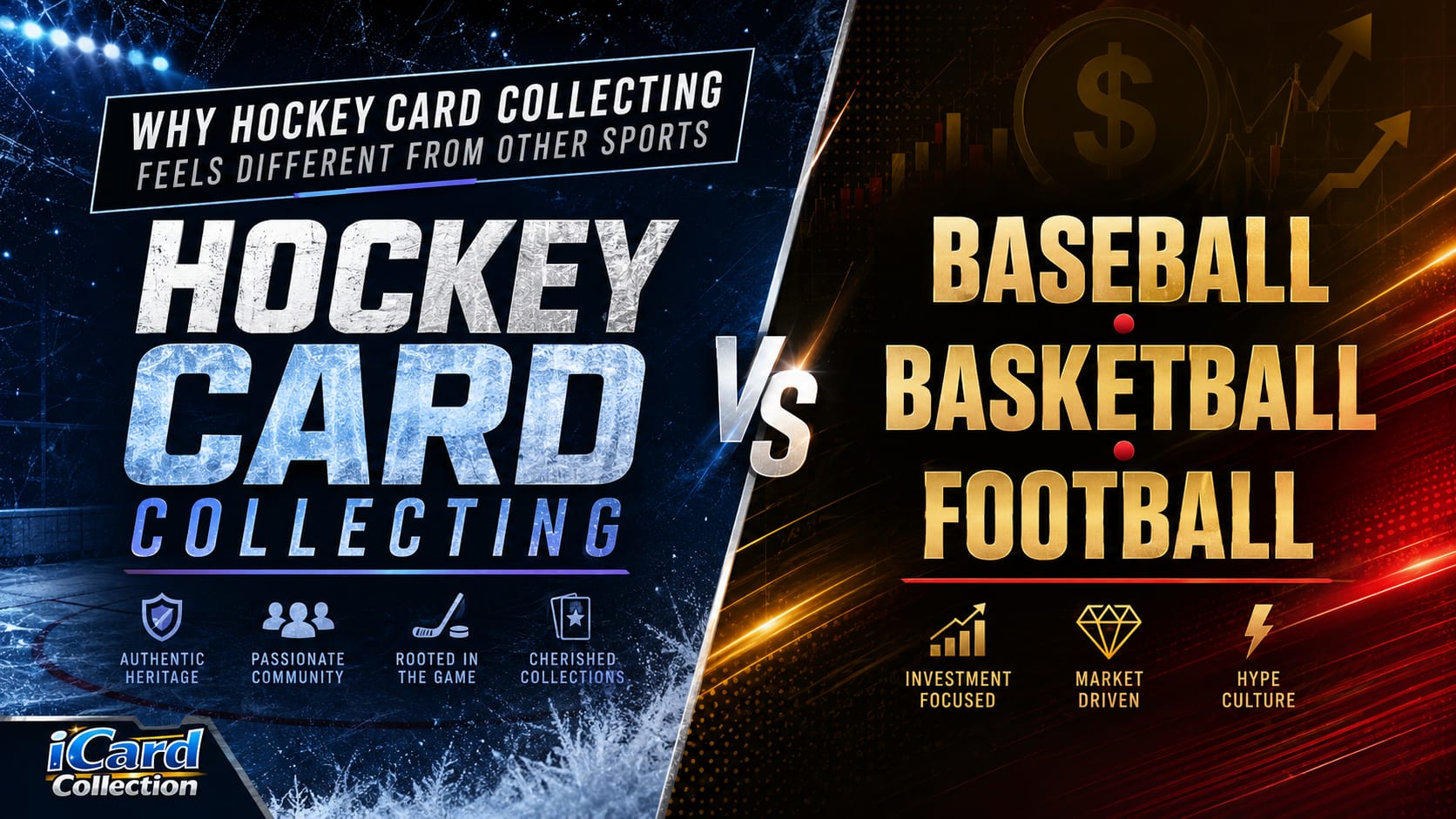
But weirdly enough, that’s also part of what makes hockey collecting feel different. Hockey Card Collecting Feels More Hobby-Driven
In sports like basketball and baseball, there are a lot of people involved purely because there’s serious money to be made. And there’s nothing wrong with that. But hockey has always felt more collector-driven than investor-driven.
Most people collecting hockey cards are actually hockey fans first. They watch games. They follow prospects. They care about teams. They know fourth-line grinders and backup goalies most casual sports fans have never even heard of.
The hockey card hobby has always felt a little more niche, and because of that, the community tends to feel tighter knit too.
You see the same names around. Collectors recognize each other at card shows. People build relationships through trading. And for the most part, the hobby still feels centered around collecting rather than purely flipping.
That doesn’t mean hockey cards cannot become expensive or valuable. They absolutely can.
But compared to some other sports, hockey collecting still feels closer to what card collecting originally was supposed to be: people collecting players and cards they genuinely love.
Hockey Cards Still Feel Accessible
One of the biggest advantages of hockey card collecting is that it still feels relatively accessible compared to other sports.
Sure, wax prices have gone up massively over the last few years, and top-end rookie cards can still become expensive.
But compared to basketball or football, hockey collectors are generally not getting completely priced out of every major rookie card or prospect chase.
And that’s important for keeping the hobby enjoyable long term.
Because once a hobby becomes entirely dominated by investors, breakers, and people chasing ROI, it starts feeling less personal and more transactional.
Hockey has avoided a lot of that compared to other sports. Not entirely. But more than most.
The Hockey Card Hobby Still Feels Like a Community
More than anything, hockey card collecting still feels like a community. It feels smaller. More personal. More relationship-based.
And honestly, that’s probably why so many collectors stay in the hockey hobby long term. You’re not just buying cardboard.
You’re talking hockey. Making trades. Meeting collectors. Sharing collections. Going to card shows. Building friendships. And even as the hobby continues to grow, that collector-first atmosphere still feels like the heart of hockey card collecting.
That’s also a huge part of what we’re trying to build with iCardCollection — a hockey-only platform focused less on pure transactions and more on community, trading, showcasing collections, and bringing hockey collectors together online.
Because at the end of the day, hockey card collecting has always felt a little more personal than the rest of the sports card world.