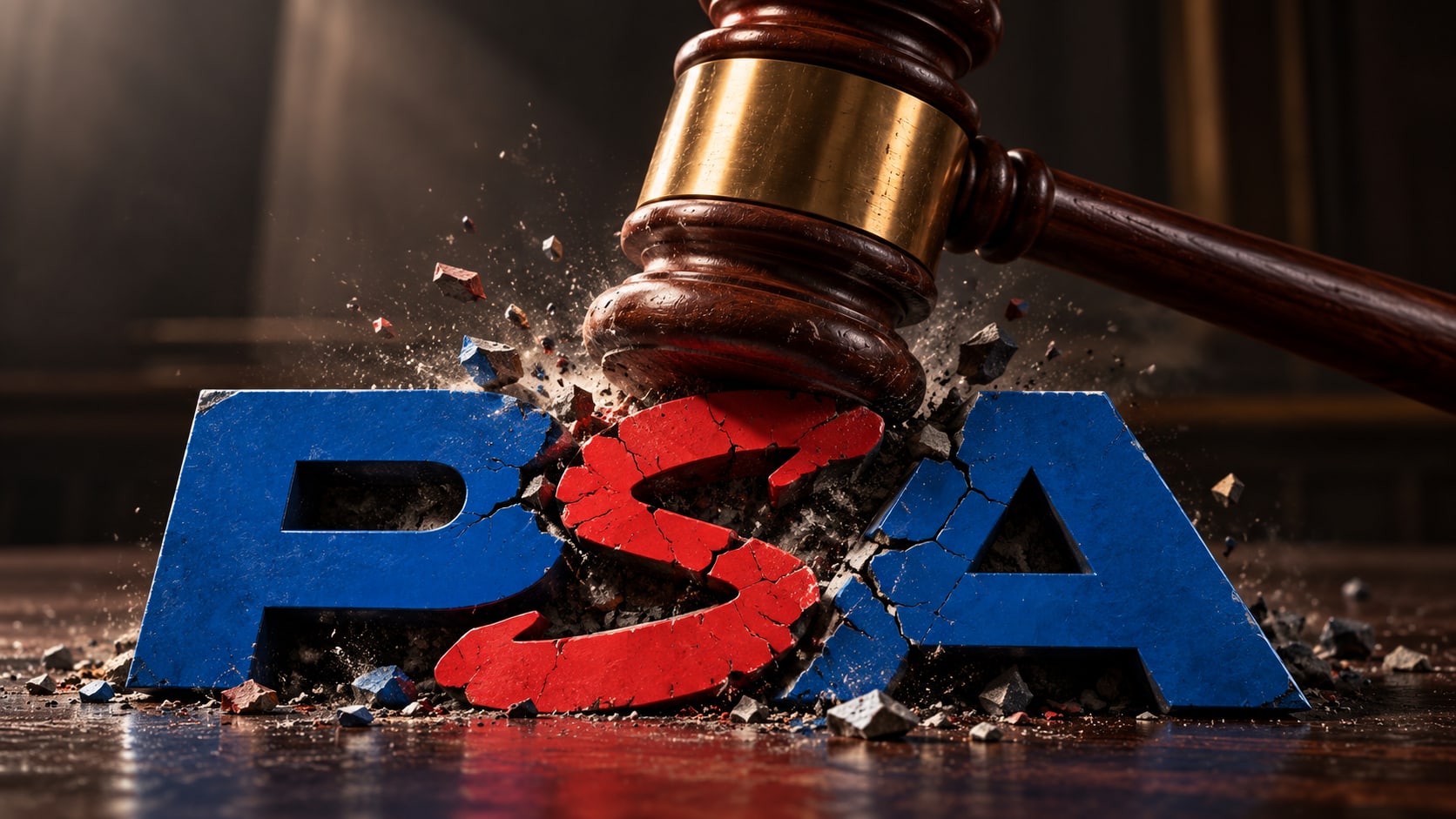
PSA has been the king of card grading for decades.
For most collectors, especially in sports cards and Pokémon, the PSA slab has carried the strongest premium. A PSA 10 often means more money, more buyer confidence, and more respect in the market.
But a new federal lawsuit is now asking a question the hobby has been whispering for years: What if the system is not as trustworthy as collectors thought?
To be clear, everything in the lawsuit is still an allegation. Nothing has been proven in court, and PSA will have its chance to respond.
But the claims are serious enough that collectors should at least understand what is being alleged.
What Is the PSA Lawsuit About?
On July 28, 2026, Baltimore collector Nicholas Funk filed a proposed class action lawsuit against PSA and its parent company, Collectors Holdings, in federal court in Maryland.
The complaint reportedly accuses PSA of fraud, racketeering, negligent misrepresentation, breach of contract, unjust enrichment, and violations of Maryland consumer protection law.
That is a lot of legal language, but the basic idea is simple:
The lawsuit claims PSA markets grading as objective, consistent, and rules-based, while allegedly relying on subjective judgment, inconsistent standards, and business practices that benefit from the grading system staying exactly the way it is.
Again, those are allegations. But if even part of them survives in court, this could become one of the biggest legal stories the card hobby has ever seen.
The First PSA Card Is Part of the Story
One of the most interesting parts of the lawsuit involves PSA’s first-ever graded card.
The complaint points to PSA certification number one: the famous T206 Honus Wagner card.
According to the lawsuit, that card was allegedly trimmed, meaning it had been cut down or altered, yet PSA still graded it. The complaint argues that this matters because PSA’s published standards were supposed to reject altered cards.
That is a massive claim.
The lawsuit is basically saying the trust issue did not start with recent backlogs, grading complaints, or social media scandals. It is arguing that the problem goes all the way back to card number one.
Whether the court agrees is a different question.
But from a collector’s perspective, it is not hard to understand why that allegation gets attention. If the first card ever graded by PSA becomes a central fraud allegation, it hits directly at the company’s origin story.
The Resubmission Problem
The lawsuit also lands in the middle of a hobby-wide frustration collectors already understand: regrading.
Everyone knows the game.
A card comes back a PSA 9. The owner cracks the slab, sends it in again, and hopes it comes back a 10. Sometimes it does.
That alone creates a trust problem. If the same card can receive different grades at different times, collectors start wondering whether the grade is really a fixed measurement or just one opinion on one day.
That matters because the difference between a PSA 9 and PSA 10 can be huge. On some cards, it may be a small bump. On others, it can mean hundreds, thousands, or even more.
When one number changes that much money, consistency is not optional.
The Population Report Question
Another serious allegation is that PSA intentionally limits the number of Gem Mint 10 grades for certain cards.
If true, that would be a massive issue.
The entire PSA 10 premium is based on the idea that 10s are rare because truly gem-mint cards are rare. But the lawsuit suggests a different possibility: that population reports could be influenced by business decisions rather than card condition alone.
That is not proven.
And proving intent inside a grading room will probably be difficult.
But the question itself is important.
A PSA population report is not just trivia. Collectors use it to judge scarcity, value, and long-term demand. If collectors lose trust in population data, they may also start questioning the premiums attached to PSA slabs.
The Buyback Scandal Still Lingers
The lawsuit also arrives after another controversy that already had collectors questioning PSA.
In late 2025, the hobby reacted to reports that a collector sold PSA 9 cards back to PSA through a buyback program, only for some of those same certification numbers to later appear as PSA 10s.
That situation became one of the loudest grading controversies in recent memory.
PSA described it as an isolated issue, but many collectors saw it as a bigger trust problem.
Because if a card can be graded a 9, bought at a 9 price, and later appear as a 10 with the same cert number, collectors are obviously going to ask questions.
How did the grade change?
Why did it change?
And would the original owner have gotten that same result if they kept the card and resubmitted it themselves?
Is PSA Too Big to Fail?
This is where the hobby gets uncomfortable.
PSA is not just another grading company. It is the grading company for a huge portion of the market.
There are millions of PSA slabs in circulation. Auction houses rely on them. Buyers search for them. Sellers price around them. Collectors build entire collections around matching PSA holders.
That creates a strange problem.
Even if collectors have concerns about PSA, many still depend on the PSA premium.
If you own a collection full of PSA 10s, you probably do not want the market to suddenly lose faith in PSA 10s. Your own collection value may depend on that trust staying intact.
That is why PSA may be too big to fail in the eyes of the hobby.
Not because collectors think everything is perfect.
But because so much money is already locked inside the system.
What Happens If Trust Starts to Break?
The lawsuit does not mean PSA is finished.
Not even close.
PSA still has enormous brand power, massive market share, and the strongest resale premium in many parts of the hobby.
But if trust starts to weaken, the effects could be real.
Collectors may start spreading submissions across more grading companies. PSA 10 premiums could shrink. Raw cards could become more appealing for certain buyers. Companies with more transparent grading reports, like TAG, could get more attention.
That does not mean TAG, SGC, Beckett, or anyone else automatically replaces PSA.
The hobby does not change overnight. But trust can shift slowly, then suddenly. And grading is built entirely on trust.
Is This the End?
So, is this the end of PSA? Probably not.
But it may be the start of a much bigger conversation.
The lawsuit is forcing collectors to look at the grading system more closely. Not just PSA, but the entire idea of letting one company assign a number that can dramatically change the value of a card.
The card itself is real. The slab is a claim. And that claim only matters if collectors trust the company making it.
For now, nothing has been proven in court. PSA slabs are not suddenly worthless. Panic selling because of a lawsuit would be premature. But collectors should pay attention.
Because if a federal court starts digging into PSA’s grading standards, population reports, buyback practices, and conflicts of interest, the outcome could shape the future of graded cards.
PSA may still be too big to fail.
But the real question is this: What happens to the hobby if collectors stop believing the number on the slab?